

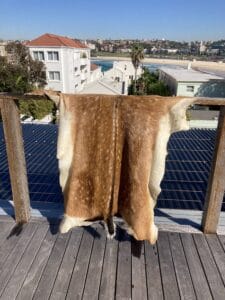
Tanning & Meditating on Deer Skin

Disclaimer:
Read this whole article before forming any opinion or judgments around the ethics of tanning deer skin.
This article contains photos ofย deerย skinย and its flesh.

WHAT DREW ME TO DEER SKIN

When I met my friend Ei (@buckywardbucksin) she was telling me about all the different animal hinds that she tans.
Tanning is the process of converting animalย skinย into leather through a variety of methods. It is one of the practices of โ€œBush Crafts.โ€
I was interested in this hobby of hers, as I am mostly always interested in practices people use to connect to nature, especially practices that are radical and unfamiliar to me.
When Ei mentionedย deerย in the animals she was listing, it immediately sparked my interest further.
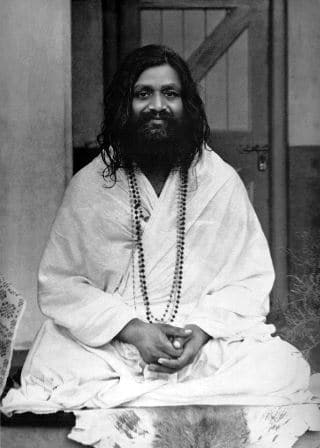
I thought about all the Yogis, Rishis (seers) and sages of India that historically meditated onย deerย skin;ย including my Guruโ€™s Guru, Maharishi Mahesh Yogi.
Maharishi’s assistants would always carry a deer skin all around the world for him to sit on while he would lecture or meditate.

NOT ONLY ETHICAL, BUT SUSTAINABLE (FOR ME)

Ei gets herย deerย hinds from a hunter in upper New South Wales who hunts forย deerย meat and sells it commercially.
After skinning theย deer, the hunter usually throws out theย skinย into a landfill.
Instead of that, Ei gets theย skinย from the hunter (for free) and with absolute reverence for the animal, tans theย skinย and creates a whole range of thingsย (Ei has a whole wardrobe of different animal hinds which she wears at parties, gatherings and during her vision quests and survival camps in the bush).
Ei is one of the most ecologically sustainable persons I have ever met.ย She doesnโ€™t waste a thing!
She keeps all the offcuts from her leather that she creates to make handbag handles, she keeps the fur that sheds to make fishing lures, cushion stuffing or gives it to the compost, and keepย skinย scraps and rejectย skinย offcuts to make a traditional glue (apparently this procedure was used to glue together a crashed plane on a stranded island, and it could fly again).
Youโ€™ll get a deeper insight into Eiโ€™s sustainability throughout this article.
Due to the ethics and sustainability of this practice, my desire to connect with nature through animals, and a desire to own aย deerย skinย to meditate on, even as a strict vegetarian (I eat eggs occasionally) for nearly a decadeโ€ฆ
I would join Ei for 4 long days of tanning my ownย deerย hind.

MEDITATING ON DEER SKIN

Why the Yogis and Rishis meditated or sat onย deerย skin:
  • Deerย skinย offers a soft and cushioning experience, which supports a more comfortable meditation.
  • It is said that theย deerย skinย prevented unwanted intruders such as ants, snakes, insects and scorpions from crawling on its surface and harming the meditating yogis.
  • Deerย skinย effectively isolates the earth’s magnetism, assisting in an unbounded cosmic experience.
  • During meditation, the energy flows upwards towards the crown, andย deerย skinย acts to insulate against the downward pull of the earth’s energy field.
  • Theย deerย skinย in its natural form (tanning it with natural substances) still hasย Pranaย (life-force) in it, which influences the meditator who sits on it.

Deerย skinย effectively isolates the earth’s magnetism, assisting in an unbounded cosmic experience.

WHY DEER?

Deer is a Sattvic (pure) animal.

Deersย are herbivores or vegetarian. They are also very gentleย (sattvic)ย creatures. The energy which is stored in theirย skinย is considered pure andย sattvic, unlike other animalย skinsย which may transmit impurities or bad energies to those who sit upon them.
Theย deerย skinย is believed to enhance the solitary tranquility and awareness required by a a meditator orย yogiย who intends to go very deep (recluse /ย sanyasiย type of people) as they absorb the pureย sattvicย energy as they sit.
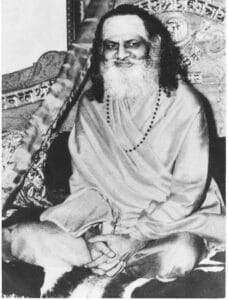
Swami Brahmananda Saraswati
Swami Brahmananda Saraswati (a.k.a. Guru Dev) meditating on deer skin
Note that otherย sattvicย herbivores may not produce the โ€œneutralโ€ effects of theย deer.
You may have seen Yogis or Rishis sitting onย tigerย skin.ย This was more commonly used in invoking the wrathful aspects of consciousness or deities, and denotesย rajasย (stimulating and dynamic energy) rather thanย sattva.
Tigerย skinย is more powerful thanย deer skin, but is only to be used byย yogisย with great mastery over their passions or lust (kama) and anger (krodha).
Ramana Maharishi sitting on tiger skin – picture taken around 1930 in India

The relationship betweenย Deer and the Mind

Deerย represent the fickle nature (chamchalatฤซย – ย เคšเค‚เคšเคฒเคคเคพ) of the mind.ย 
Just as theย deerย wanders around elusively and is hard to catch, so is the mind. It is always wandering and it is challenging to stabilise a coherent composure with self-mastery over the mind.
This is why it is difficult for people to initiate into meditation or find extended periods of deep meditation challenging (8+ hours/day, usually relevant for reclusive ascetics /ย โ€œSanyasisโ€.).
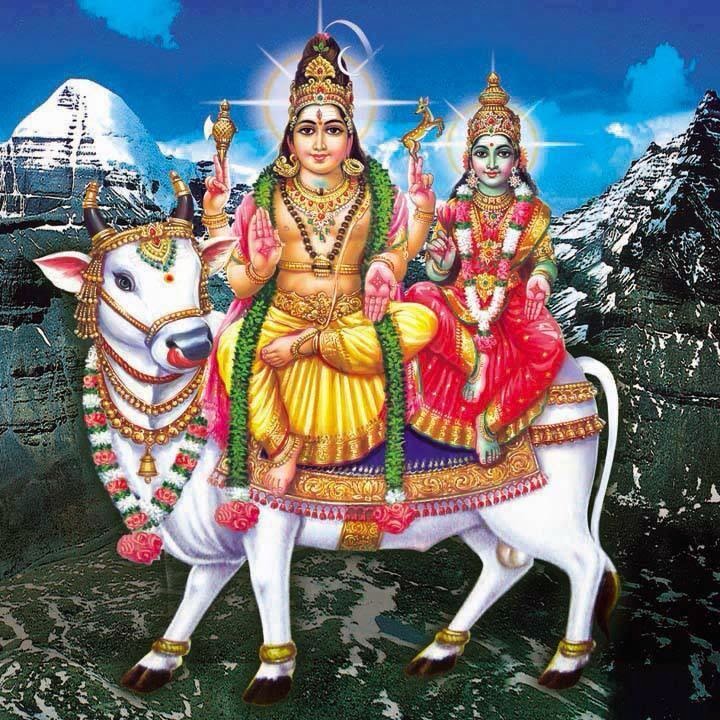
This is why the texts conveying Lord ลšiva (the destruction operator) sitting onย Deerย skinย or holding aย Deerย in his hands represent the mastery aย yogiย can have over his mind.
Even in Buddhism,ย deerย or antelopeย skinsย serve as meditation seatsย (asanas)ย for Buddhist yogis.
Lord Shiva holding a deer in his hand, sitting on a cow next to his wife Parvati
Lord Shiva holding a deer in one of his hands & Uma/Parvati sitting next to him
The Bhagavad Gita (a spiritual story and the most commentated text in the world) especially mentionsย deerย skinย for the purpose of aย asanaย (seat) inverse (6.11):
โ€œIn a clean place, having established a firm seat of his own, neither very high nor very low, covered with cloth,ย deerย skinย and kusa grassโ€ฆโ€

Deer Skin Absorbs Shakti (Divine Energy)

Theย skinย absorbs some of the extraย shaktiย generated during practice and becomes a valuable and nourishing aid each time you sit on it.
This is why people value the seats or cloths that gurus sit on, or theย malasย (necklaces) that they wear, because it absorbs their potentย shakti.

TANNING DEER HIND: THE PROCESS

1. Acquire a Dead Animal or Animal Skin

This can be done in many ways such as:
  • Scavengingย skinsย that hunters usually dispose of (we did this)
  • Harvesting roadkill (has to be warm/a fresh kill)
  • And of course hunting (if you choose this, we recommend to do sustainably with reverence)
Freshly harvested deer skin

2. Skin the deer

While the dead animal is still โ€œwarmโ€,ย skinย it and preserve theย skinย in a freezer or salt or start the tanning process. This prevents โ€œhair slipโ€ – which is when the fur falls out, and from going rotten.
Unfortunately, I missed this as I had to travel for Eis workshop.
This would have been (emotionally) hard for me to see, and definitely harder to do myself, but I believe it is crucial to be able to handle whatever substance you are utilising in all its forms and stages, including its raw and gruesome forms.
For tanning leather when keeping the fur, the whole time you are working on the โ€œinsideโ€ of theย skin.

3. Scrape Off Excess Fat and Flesh

Following these steps:
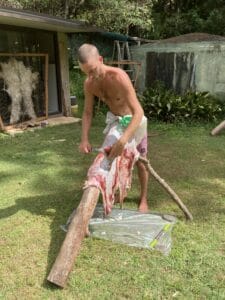
  1. Once you have theย skin, prop it up on a smooth log (Ei made this little apparatus).
  2. Keep some towels below theย skinย as padding so theย skinย doesnโ€™t cut against the wood.
  3. Keep some plastic against you for cleanliness.
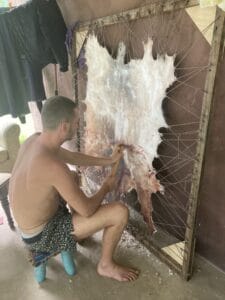
  4. Using a specific scraper, scrape off the remaining flesh, fat and bone-marrow. This can be kept for your pet dog to eat.
Dylan Smith scraping remains off the dear skin
This was the most confronting part for me: receiving the fleshyย skinย from the hunter. I wasnโ€™t expected to be confronted or grossed out. But being a vegetarian for nearly a decade and having aversion to meat, it was like being a butcher. I soon got over it and was less previous about my hands getting dirty.
Here was a profound and beautiful connection with the individual soul of thisย deer. Although only theย skinย and some flesh remained, a unique Prana (life-force) of that soul still emanated out of theย skin.
I could further understand why burning bodies assists in liberating the soul from earth into the other realms (lokas).

4. Tie Up the Skin on a Rack/Frame

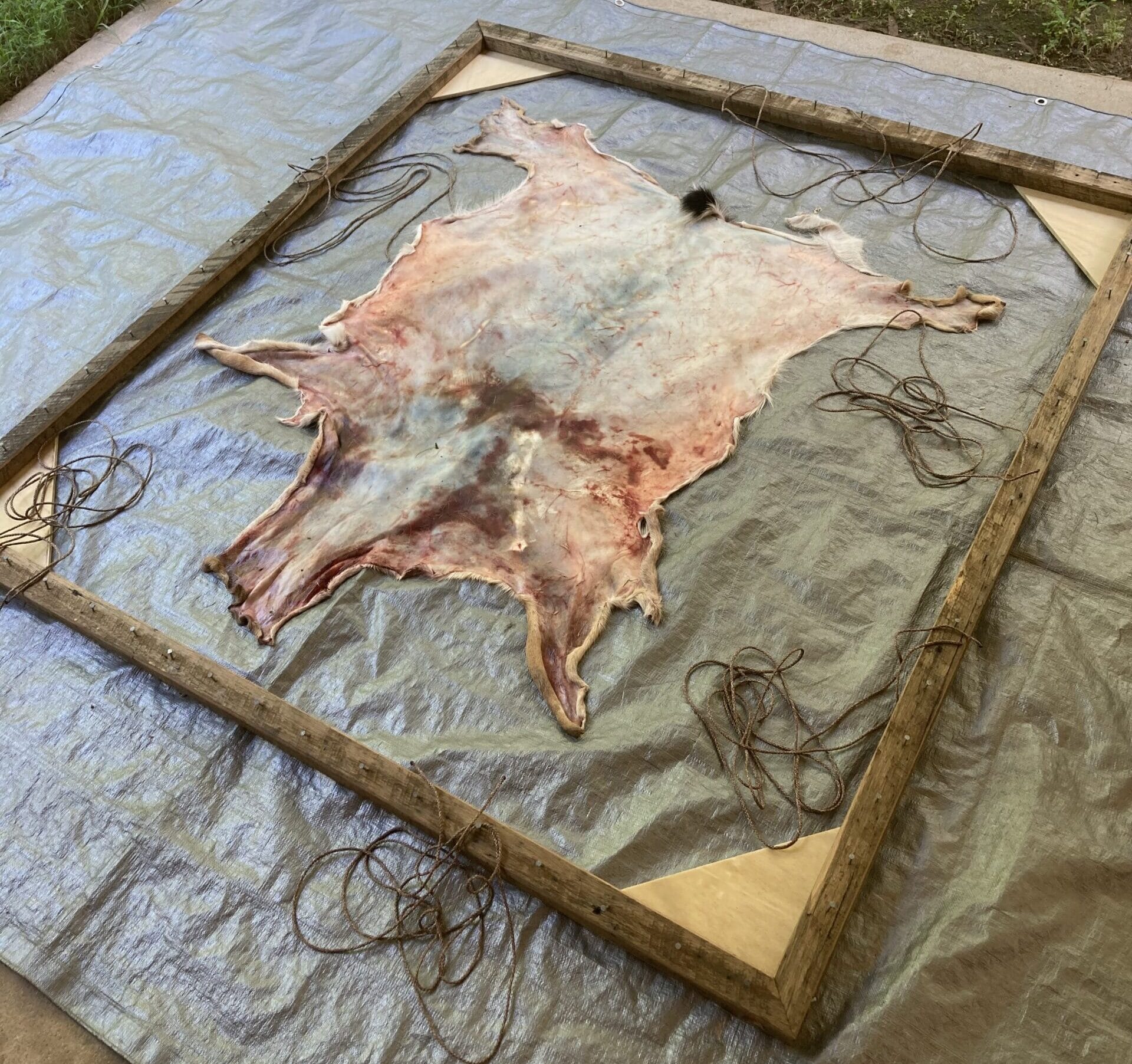
Ei made these wooden frames to fit theย skin.
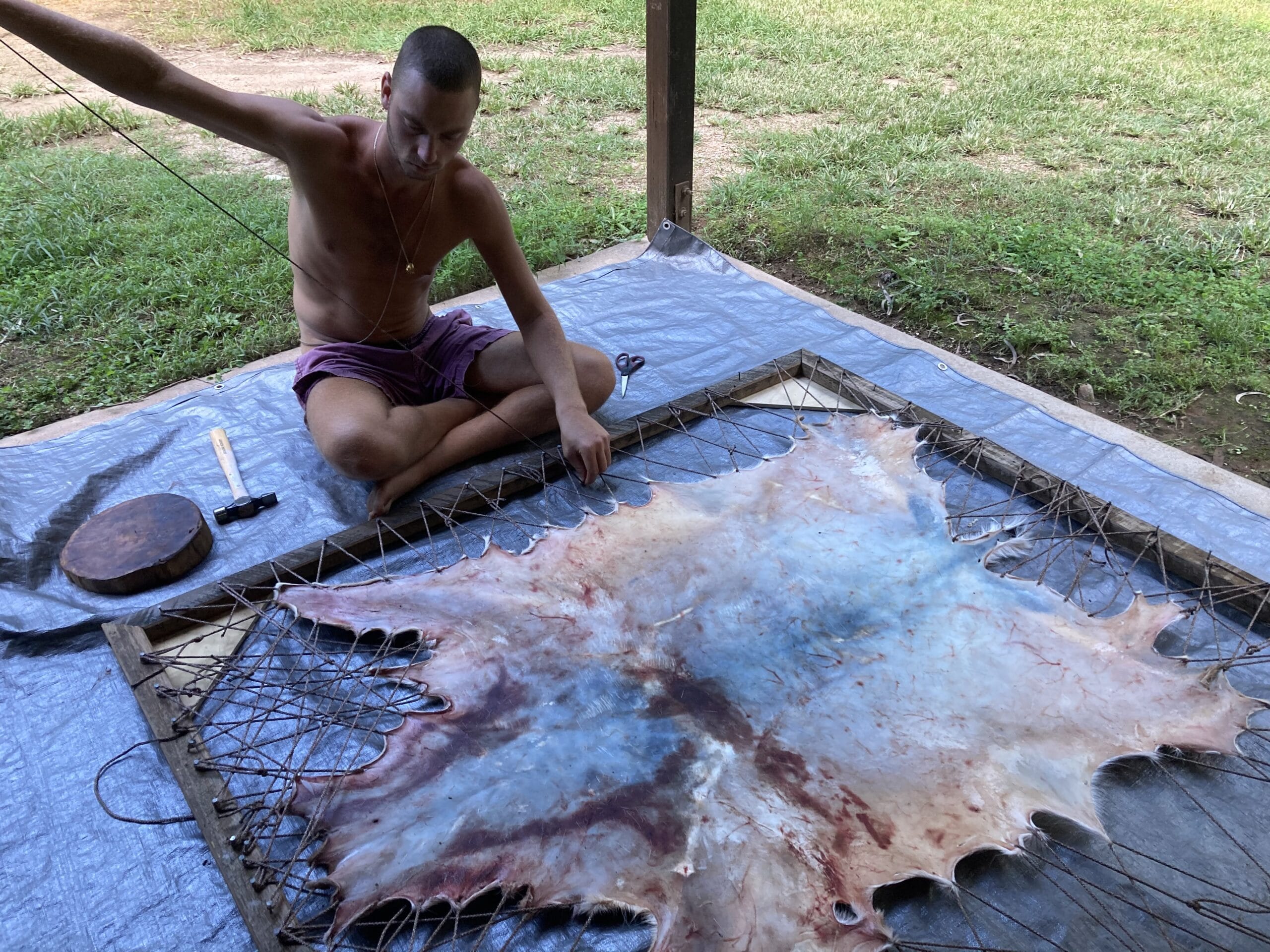
Following these steps:
  1. Hammer in nails that stick out a couple of inches apart.
  2. Cut a hole around the edges of theย skin. Use a sharp knife. It would be good to have something like a hole puncher.
  3. Using a strong steel cable or wire rope, thread through the holes and tie up to the nails to stretch theย skin.
  4. Donโ€™t tie tight as it will be adjusting as you go around theย skinย and frame.
  5. Itโ€™s really good to use the โ€œRolling Hitch Knotโ€ as you can adjust the tightness or loosens.
Deer skin and wooden rack laying on the floor
Dylan Smith tying up deer skin to a wooden rack

5. Rack and Dry

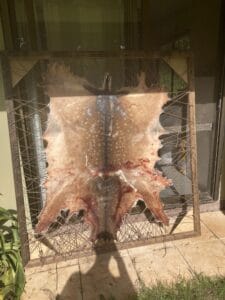
Leave in a warm and dry place to dry.
Deer skin left to dry in the sun

6. Scrape Remaining Flesh & Membrane

  • With a specific scraper, scrape the remaining flesh and membrane.
  • This will kind of be like shaving off dried meat.
  • Donโ€™t go too hard to rip theย skin, but it is pretty sturdy.

7. Dress the Skin in Brains

  • We use the brains of that animal as an emulsifying agent.
  • Basically painting fats of the brain into theย skinย to replace mucous.
  • The fats of the brains are dissolved and cooked in water to make the emulsifying agent.
  • It is basically a primal and the most suitable leather conditioner.
  • It is said every animal has enough brains to dress their ownย skin.
  • We could not get the brain of theย deer, so we got the brain of goats from a local butcher.

8. Sow Up Any Holes

  • Any holes or tears to sow up can be done now (or basically anytime in the process).
  • This is important before softening as the softening may stretch tears that are present.
  • The fibre for sowing can be sinew harvested from a kangaroo tail or similar fibre threads.

9. Softening

  • This is the most laborious and trickiest part.
  • While theย skinย is tied up to the rack and wet with the brains, it becomes soft and moist.
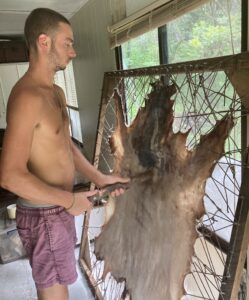
  • With a thick wooden stick or (traditionally) the elbow bone of the animal, push the stick into theย skin, softening and loosening it. You are basically opening up the fibres of theย skinย to allow the brains to penetrate into the fibres.
Dylan Smith softening deer hind
  • You are doing this while theย skinย is drying. So basically, you are โ€œfightingโ€ against the drying process – as theย skinย is drying, the fibres close, tighten up and become rough. The constant โ€œdiggingโ€ or pushing into theย skinย is down the opposite – it is loosening and softening theย skin. You basically have to do this for a whole day until theย skinย is dry. This way, it didnโ€™t dry by itself and became shrivelled up and hard. It dried while you were working against that process so it didnโ€™t shrink to much and get hard.
  • Doing this in a warm environment will make the process quicker and less laborious. You donโ€™t want it to be too warm or you wonโ€™t โ€œkeep upโ€ the drying/tightening process. When I did it, it was raining and cold, so I softened in a small shed with a heater on.

10. Smoking

  • The hard part is done.
  • The hind now needs to be smoked to get rid of all bacteria. This will help preserve the hind and prevent hair slip.
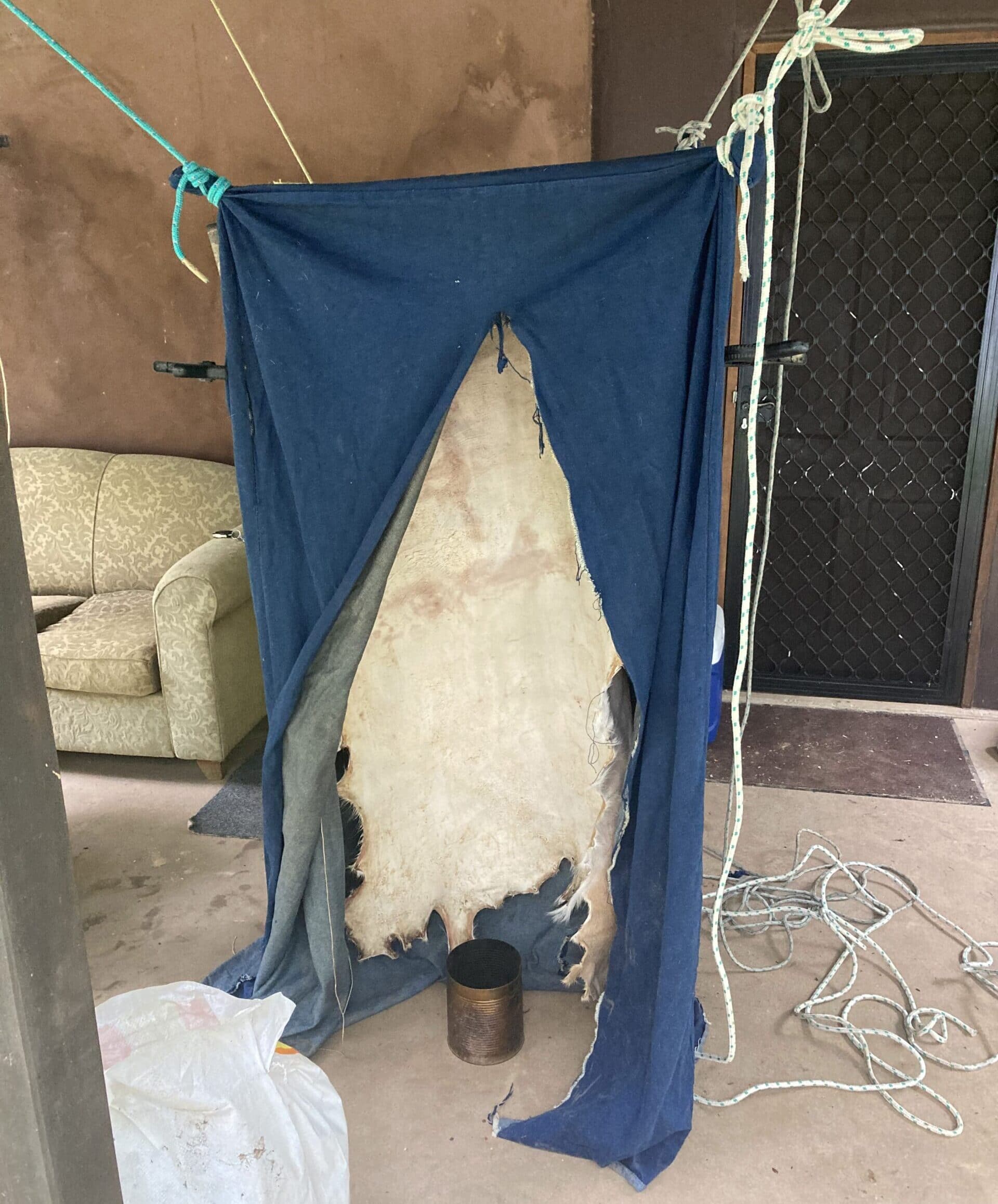
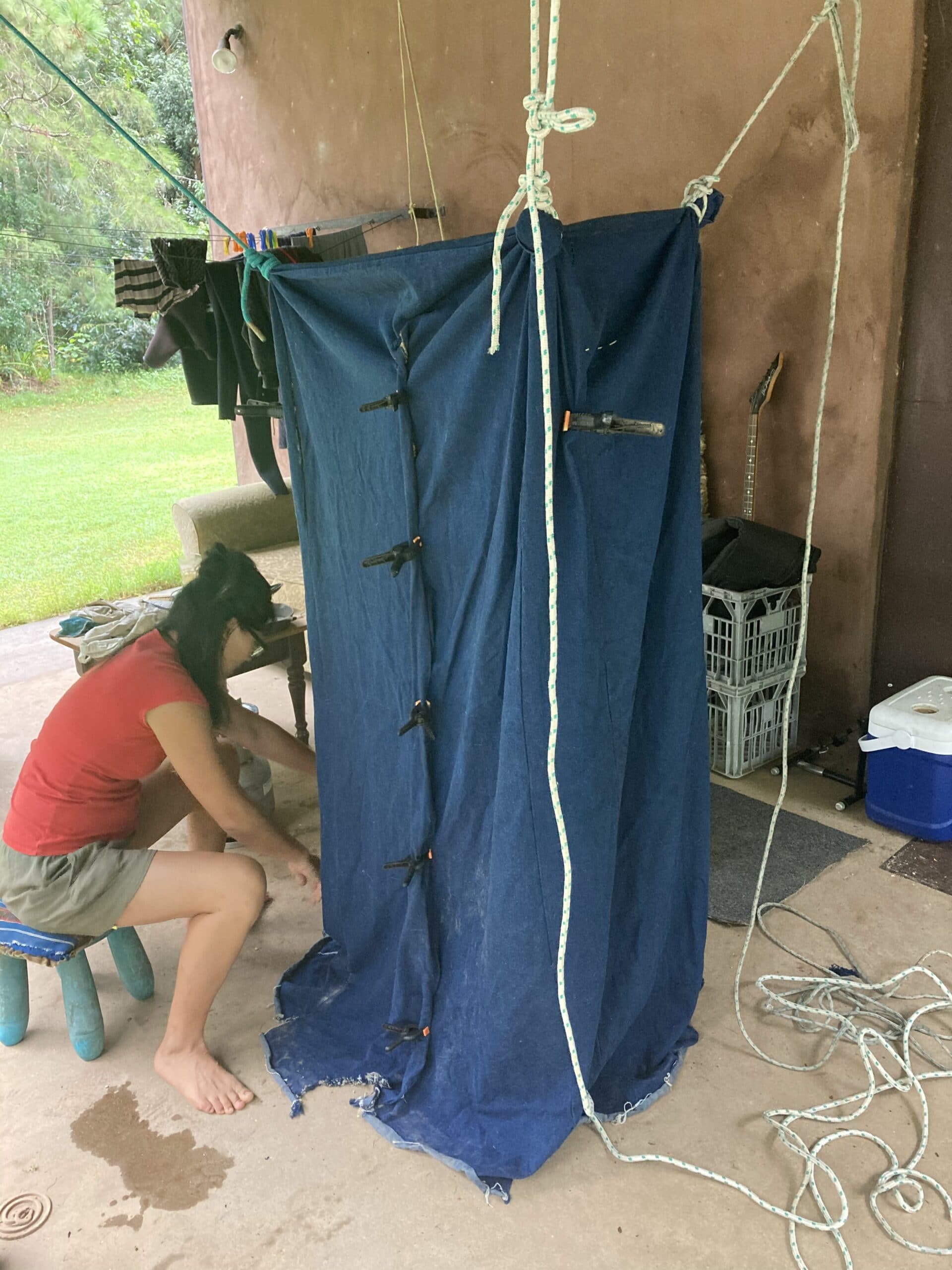
  • For smoking we used a homemade denim smoker made by genius Ei. Literally recycled denim jeans with some racks inside.
  • We clipped the hind inside the denim. For smaller hinds/skins, you can make a mini clothes line inside the smoker.
  • We burnt Pandanus wood from the local palm-like native shrub because the wood burns really well and long. We the burning wood in a large tin in the smoker for the whole day and re-lit the wood only 1-2x.

11. Wash and Dry

  • Only wash when the weather is warm enough to dry theย skin.
  • Hand wash the hind with a wool softener or baby shampoo in a bathtub or big bucket.
  • Wash till the water is pretty clean.
  • Washing is to remove the strong smoky smell.
  • Dry in the sun or warm environment.
  • I made the mistake of washing on a rainy day and hence dried it in front of a gas heater that was too hot. This made it way too dry and hard, and I had to later do another softening!!
Deer skin laying in the sun

12. Trim and Finish

  • Cut off with quality scissors the holes, tears, off-pieces to shape the edges well.
  • Cut the offshoots in a shape where you can reuse them – sowing together for handbag handles or glue.
  • Itโ€™s ready!
There are heaps of different ways to tan animalย skins.
There is vegetable tanning (tanning with plants like the decoction of certain barks. In Australia, wattle bark is traditionally used).
If you want to learn more or even attend a workshop, contact Ei on Instagram (@backyardbuckskin).
I loved getting an insight into this primal bushcraft, and canโ€™t wait to explore it further to more deeply honor the animal kingdom.
Have you ever tanned animal hind or own any? Comment below ๐Ÿ‘‡
Categories
Latest posts
Credits

Special thanks to Rudolf Steiner and Jiddu Krishnamurti for providing content.

Contact Us
Social
Receive the latest updates

Subscribe To Our Newsletter

Occasionally get notified about new offerings, special deals, wisdom and more
Receive the latest updates

Download Your Vital Short Home Cleanse Guide

Occasionally get notified about new offerings, special deals, wisdom and more

Receive the latest updates

Download Your Self-Abhyanga Poster

Occasionally get notified about new offerings, special deals, wisdom and more

Receive the latest updates

Subscribe To Our Newsletter

Occasionally get notified about new offerings, special deals, wisdom and more